What Is an Actuator and What Are the Main Types?

Time:2026-10-15 Author:Ethan
0%

An actuator is the working muscle inside a machine. It receives energy and converts it into movement, force, or position. A valve opens, a robotic arm turns, or a conveyor belt adjusts its speed because an actuator responds to a control signal. Without this component, automation remains only an idea on a screen.

Joseph Engelberger, widely known as the father of industrial robotics, said, “The key to successful automation is the proper balance between machine and man.” His observation still matters. Actuators must perform accurately, but people must choose their purpose, limits, and safety controls. That balance becomes visible on a factory floor, where a motor-driven screw moves a metal carriage, or a pneumatic cylinder pushes a carton into place.

This guide examines the main types of Actuators and their practical differences. Electric actuators offer precise control and clean operation. Pneumatic actuators provide quick movement using compressed air. Hydraulic models deliver powerful force for heavy machinery. Rotary actuators create turning motion, while linear actuators move along a straight path. Some systems also use piezoelectric or thermal technologies for specialized tasks.

The choice is rarely perfect.

A fast actuator may waste energy. A powerful one may be too large. A precise unit may cost more than the application justifies. Engineers must consider load, speed, stroke, duty cycle, environment, maintenance, and failure behavior. Those details often decide whether a system performs reliably or merely appears impressive during a demonstration.
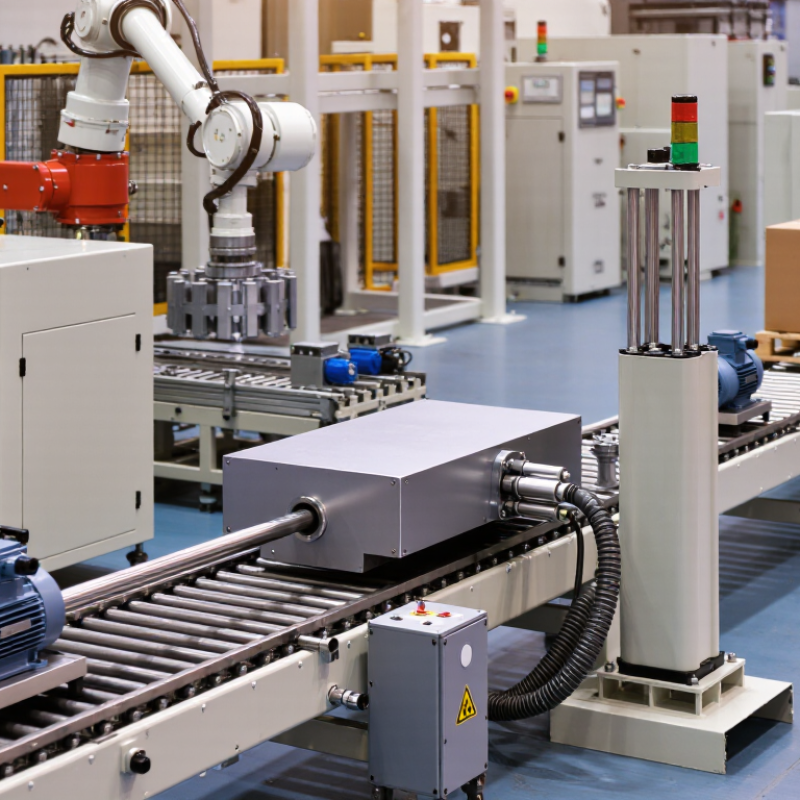
What Is an Actuator and What Are the Main Types?

Actuator Definition and Its Role in Mechanical Systems

Actuators are devices that convert energy into controlled physical movement. They receive a command, then produce force, torque, or displacement. In mechanical systems, this movement opens a valve, shifts a conveyor, or rotates a robot joint. The actuator connects control logic with real-world action. Without it, sensors can measure conditions, but machines cannot respond.

The main types include electric, pneumatic, and hydraulic actuators. Electric models provide clean, precise motion for positioning equipment and automated tools. Pneumatic actuators use compressed air and react quickly, although their motion can feel less exact. Hydraulic actuators deliver high force through pressurized fluid, making them suitable for heavy machinery.

Linear actuators move along a straight path. Rotary actuators turn shafts or gears. Some systems combine both forms.

Choosing an actuator requires more than checking its maximum force. Engineers should examine stroke length, speed, duty cycle, load direction, temperature, and available energy. Feedback devices can report position and prevent overshooting. In maintenance work, loose couplings and poor alignment often cause more trouble than weak motors. A small error matters.

I would also question optimistic calculations. Real loads include friction, vibration, and sudden resistance. A reliable design leaves a sensible margin, but excessive capacity wastes energy and space.

How Actuators Convert Energy into Motion

What Is an Actuator and What Are the Main Types?

How Actuators Convert Energy into Motion

An actuator is the working muscle inside an automated system. It receives energy and produces controlled movement. Motion follows energy. Electric actuators use motors, gears, and lead screws to create rotation or linear travel. Hydraulic actuators use pressurized fluid, often producing high force for lifting or clamping. Pneumatic actuators use compressed air for quick, repetitive strokes. Thermal, piezoelectric, and magnetic actuators serve smaller or highly precise applications.

The International Energy Agency estimates that electric motor systems consume about half of global electricity. This figure explains why actuator efficiency matters beyond one machine. A motor may turn a screw, but friction, heat, and poor alignment waste part of its input. The conversion is never perfect. The U.S. Department of Energy has reported that motor-driven equipment can represent roughly 70% of industrial electricity use in the United States. Choosing the actuator requires more than checking force ratings. Engineers must examine speed, duty cycle, load direction, temperature, and maintenance access. World Robotics 2024 recorded 541,302 industrial robot installations worldwide during 2023, showing the scale of modern motion demand. Yet sizing remains partly judgment. A smaller actuator can overheat, while an oversized unit may waste energy and respond poorly. A practical test often reveals what the datasheet misses.

Main Actuator Types and Their Operating Principles

What Is an Actuator and What Are the Main Types?

Main Actuator Types and Their Operating Principles

An actuator converts energy into controlled movement. In practical systems, that movement may be linear, rotary, slow, or highly precise. Electric actuators use a motor, gears, and often a screw mechanism. The motor turns electrical energy into rotation. A screw then produces measured linear travel. They suit valves, robotic joints, and adjustable machinery. However, gear backlash can reduce positioning accuracy.

Pneumatic actuators use compressed air to push a piston inside a cylinder. They move quickly and remain relatively simple to maintain. Hydraulic actuators use pressurized fluid instead. This fluid can create much greater force for lifting equipment or moving heavy loads. Rotary vane and hydraulic motor designs provide turning motion. Solenoid actuators create short, direct movements through electromagnetic force. Thermal actuators respond to heat, but their movement is usually slower. No type is perfect. Real installations often reveal vibration, leakage, noise, or unexpected wear.

Tips: Match force, stroke, speed, and duty cycle before choosing an actuator. Check the working temperature and surrounding moisture. Leave space for maintenance and manual access. For pneumatic systems, inspect air quality and pressure stability. For hydraulic systems, monitor fluid cleanliness and seals. Electric systems need suitable overload protection and feedback when accuracy matters. Test the actuator under realistic loads, not only on a workbench. Small errors in selection can become expensive later.

What Is an Actuator and What Are the Main Types? - Main Actuator Types and Their Operating Principles

Actuator Type Energy Input Operating Principle Output Motion Typical Force or Torque Main Advantages Common Limitations Typical Applications
Electric Rotary Actuator Electrical power An electric motor converts electrical energy into rotary motion. Gears, brakes, or controls may regulate speed and torque. Continuous or limited-angle rotation Approximately 0.1–10,000 N·m, depending on motor size and gearing Accurate positioning, adjustable speed, clean operation, and easy electronic control May require cooling, protection from harsh environments, and a controller or drive Robotic joints, valves, indexing tables, conveyor systems, and positioning equipment
Electric Linear Actuator Electrical power A motor drives a lead screw, ball screw, belt, or linear motor to produce controlled linear displacement. Linear extension and retraction Approximately 100–50,000 N, depending on mechanism and size Precise travel control, programmable speed, high repeatability, and no compressed-air system Screw and gear wear can occur; continuous high-load operation may generate heat Lifting columns, machine slides, adjustable furniture, gates, and automated production equipment
Pneumatic Linear Actuator Compressed air Compressed air acts on a piston or diaphragm. The resulting pressure difference creates linear force. Linear extension and retraction Typically tens to several tens of thousands of newtons; force depends mainly on bore area and air pressure Fast response, simple construction, low initial cost, and suitability for repetitive motion Air compressibility reduces positioning accuracy; requires an air compressor, valves, and filtration Clamping, pick-and-place systems, packaging machines, material handling, and assembly lines
Pneumatic Rotary Actuator Compressed air A vane, rack-and-pinion, or Scotch-yoke mechanism converts piston or air pressure into rotary torque. Limited-angle rotation, commonly 90° or 180° Approximately 1–10,000 N·m, depending on design and air pressure Compact, quick cycling, and well suited to quarter-turn valve operation Limited angular range and less precise positioning than many electric systems Valve actuation, part rotation, diverting mechanisms, and automated handling systems
Hydraulic Linear Actuator Pressurized hydraulic fluid Hydraulic pressure acts on a piston inside a cylinder. Force is approximately equal to fluid pressure multiplied by piston area. Linear extension and retraction From several kilonewtons to hundreds of kilonewtons or more Very high force density, strong load-holding capability, and good performance under heavy loads Potential fluid leakage, higher maintenance requirements, and the need for a pump and reservoir Construction machinery, presses, injection-molding equipment, lifting systems, and aircraft controls
Hydraulic Rotary Actuator Pressurized hydraulic fluid Fluid pressure drives a vane, piston, or helical mechanism to generate rotary torque. Limited-angle or continuous rotation From hundreds to tens of thousands of N·m, with larger units exceeding this range High torque in a compact package and strong resistance to shock loads Requires hydraulic infrastructure; leakage, heat, and fluid contamination must be managed Excavator attachments, industrial valves, marine equipment, and heavy-duty positioning systems
Solenoid Actuator Electrical power An energized coil creates a magnetic field that moves a ferromagnetic plunger, usually against a spring. Short-stroke linear motion Typically a few newtons to several hundred newtons Very fast switching, simple on/off control, compact size, and low mechanical complexity Short travel, limited continuous force, coil heating, and generally poor proportional control Locks, relays, fluid valves, vending mechanisms, printers, and safety interlocks
Piezoelectric Actuator Electrical voltage Piezoelectric material changes dimension when an electric field is applied. Mechanical amplifiers may increase the small displacement. Very small linear motion or vibration Low to moderate displacement force, often with nanometer- or micrometer-scale travel Extremely precise, rapid response, high stiffness, and no conventional gears or bearings Very limited stroke, requires suitable high-voltage electronics, and may show hysteresis Precision optics, micro-positioning, ultrasonic devices, inkjet systems, and vibration control
Voice Coil Actuator Electrical current Current flowing through a coil interacts with a permanent magnetic field, producing a force proportional to current over its working range. Short-stroke linear motion Typically from fractions of a newton to hundreds of newtons Smooth, fast, frictionless motion with accurate force and position control Limited stroke and holding force; continuous current can cause heat buildup Camera focusing, optical positioning, speaker mechanisms, disk drives, and laboratory instruments
Thermal Actuator Heat or electrical heating Thermal expansion of a material, bimetal strip, wax element, or shape-memory alloy produces movement as temperature changes. Usually slow linear or angular motion From low force in bimetal devices to moderate force in wax or shape-memory designs Simple, quiet, compact, and capable of responding directly to temperature Slow response, temperature dependence, and limited cycling speed Thermostats, thermal circuit breakers, valves, HVAC dampers, and temperature-regulating devices

Note: Force, torque, speed, stroke, and accuracy vary significantly with actuator size, pressure or voltage, mechanism design, load conditions, and control method.

Key Differences Between Electric, Hydraulic, and Pneumatic Actuators

What Is an Actuator and What Are the Main Types?

An actuator converts energy into controlled motion. It may push a valve, lift a platform, or rotate a robotic joint. The main choices are electric, hydraulic, and pneumatic actuators. A 2024 Grand View Research report estimates the global actuator market will continue growing through 2030, driven by factory automation, process control, and energy infrastructure.

Electric actuators use motors, screws, or gear systems. They provide accurate positioning, quiet operation, and simple digital control. They suit packaging lines and laboratory equipment. However, heat and motor wear can limit continuous duty. Hydraulic actuators deliver high force from pressurized fluid. A compact cylinder can move heavy machinery smoothly, even under shock loads. Their weaknesses include oil leakage, filtration needs, and more complex maintenance.

Pneumatic actuators use compressed air. They are lightweight, quick, and practical in wet or hazardous industrial areas. Their motion is less precise unless paired with advanced controls. The U.S. Department of Energy reports that compressed-air systems often lose 20% to 30% of their output through leaks and pressure losses. That hidden waste matters. An electric actuator may consume less energy during intermittent movement, while hydraulics can remain stronger for severe loads.

No actuator wins every test. Field experience often changes the spreadsheet decision. A clean electric system may fail in extreme heat, while a pneumatic cylinder may cycle reliably for years. Selection should compare force, speed, duty cycle, accuracy, noise, maintenance, and total operating cost.

What Is an Actuator and What Are the Main Types?

Key differences between electric, hydraulic, and pneumatic actuators

The chart shows representative force-capacity ranges commonly encountered in industrial applications. Actual performance varies with actuator design, stroke length, operating conditions, and duty cycle.

Electric Actuators

Use motors and mechanical transmissions. They provide accurate positioning, clean operation, and easy digital control.

Hydraulic Actuators

Use pressurized fluid and deliver the highest force density, making them suitable for heavy-duty equipment and high-load applications.

Pneumatic Actuators

Use compressed air for fast, simple motion. They are widely used in automation but offer less positioning precision because air is compressible.

How to Select the Right Actuator for an Application

An actuator converts energy into controlled motion. Electric actuators use motors and screws, pneumatic actuators use compressed air, and hydraulic units use pressurized fluid. The right choice depends less on popularity than on the application’s real demands. A factory may need 2,000 cycles daily, while a valve outdoors may move only twice a month.

Start with force, stroke, speed, and duty cycle. Measure the actual load, including friction and unexpected resistance. Select a safety margin, but avoid excessive oversizing. It increases cost, inertia, and energy use. According to the International Federation of Robotics’ World Robotics 2024 report, 541,302 industrial robots were installed globally in 2023. This growth increases demand for accurate, repeatable motion systems. However, robot data does not automatically justify an electric actuator for every task.

Electric actuators suit programmable positioning and clean environments. Pneumatic models offer fast, simple movement, especially for repetitive clamping. Hydraulic actuators remain useful when compact equipment needs very high force. Check temperature, dust, moisture, noise, available power, maintenance access, and emergency behavior. What happens after a power failure? A valve may need to close, hold position, or open safely. That requirement can change the entire design.

I have seen selections fail because engineers compared purchase prices only. A cheaper actuator may consume more energy or require frequent seal replacement. Review total cost over its service life. ISO 5211 mounting compatibility, protection ratings, feedback accuracy, and cycle testing also deserve attention. A selection spreadsheet helps, but it can still hide poor field assumptions. Measure twice. Then challenge the measurements.

FAQS

What is an actuator?

An actuator is the working muscle in an automated system. It receives energy and creates controlled movement.

How do electric actuators produce motion?

A motor creates rotation. Gears and a lead screw can convert that rotation into measured linear travel.

What are pneumatic actuators best suited for?

Pneumatic actuators use compressed air for quick, repetitive strokes. They often suit clamping, sorting, and simple machine movements.

When are hydraulic actuators a better choice?

Hydraulic actuators suit heavy loads requiring high force. They can lift, clamp, or move compact equipment effectively.

What factors should guide actuator selection?

Check force, stroke, speed, duty cycle, temperature, moisture, noise, and maintenance access. The real load matters most.

Why can an oversized actuator cause problems?

Oversizing increases cost, inertia, and energy use. It may also respond poorly during precise movements.

How can engineers improve actuator efficiency?

Reduce friction, correct alignment, and manage heat. Select suitable overload protection and test realistic loads.

What happens if the actuator loses power?

The system may stop, hold position, open, or close. The required emergency behavior must guide the design.

Why should actuators be tested outside the workbench?

Field loads include friction, vibration, dust, and temperature changes. A workbench test can hide these problems.

Is the cheapest actuator usually the best choice?

Not always. Frequent seal replacement or high energy use can make a cheap actuator expensive later. I might still underestimate maintenance.

Conclusion

Actuators are mechanical devices that convert energy into controlled motion, allowing machines and systems to push, pull, lift, rotate, or position components. They play a central role in automation and mechanical systems by receiving an input signal or energy source and producing a predictable physical response. Depending on their design, actuators may create linear or rotary movement and can be controlled manually, electrically, or through automated systems.

The main types include electric actuators, which use motors and electrical power for precise, efficient movement; hydraulic actuators, which rely on pressurized fluid to deliver high force; and pneumatic actuators, which use compressed air for fast and relatively simple operation. Selecting the right actuator requires considering factors such as required force, speed, stroke or rotation, accuracy, available energy, operating environment, maintenance needs, and control requirements. A suitable choice balances performance, reliability, cost, and safety for the specific application.

Ethan

Ethan

Ethan is a seasoned marketing professional with a deep expertise in our company's innovative product line. With a passion for sharing knowledge and insights, he takes the lead in regularly updating our corporate blog, where he explores industry trends, product features, and effective marketing......