Choosing among the top types of Transmission Systems requires more than comparing gear counts. Each design manages torque, speed, efficiency, comfort, and maintenance differently. Manual transmissions remain engaging and mechanically simple. Traditional automatics provide smooth shifting through planetary gearsets and hydraulic control. Continuously variable transmissions, or CVTs, keep the engine near an efficient speed. Dual-clutch transmissions deliver rapid shifts, although low-speed behavior can feel abrupt.
The U.S. Department of Energy’s 2024 Fuel Economy Guide shows how drivetrain design affects real-world fuel consumption across vehicle classes. The International Energy Agency’s Global EV Outlook 2024 also reported more than 17 million electric cars sold worldwide in 2023. That figure matters. Electric vehicles usually use single-speed reduction systems, while hybrids may combine planetary gearsets with electric motors. The categories are changing.
As automotive engineer and author Richard Parry-Jones observed, “The transmission is the most complex component on the vehicle.” His statement still deserves attention. A compact gearbox may contain dozens of precision parts, including clutches, bearings, pumps, sensors, and control valves. One overlooked seal can alter shift quality.
There is no universal winner. Not yet.
For drivers, the best choice depends on traffic, towing, climate, service access, and driving habits. For manufacturers, the challenge is harder: reduce losses without adding unnecessary weight or software complexity. This overview examines manual, automatic, CVT, DCT, AMT, hybrid eCVT, and electric reduction systems. It also questions common assumptions, because published efficiency figures may not reflect every road, load, or driver.
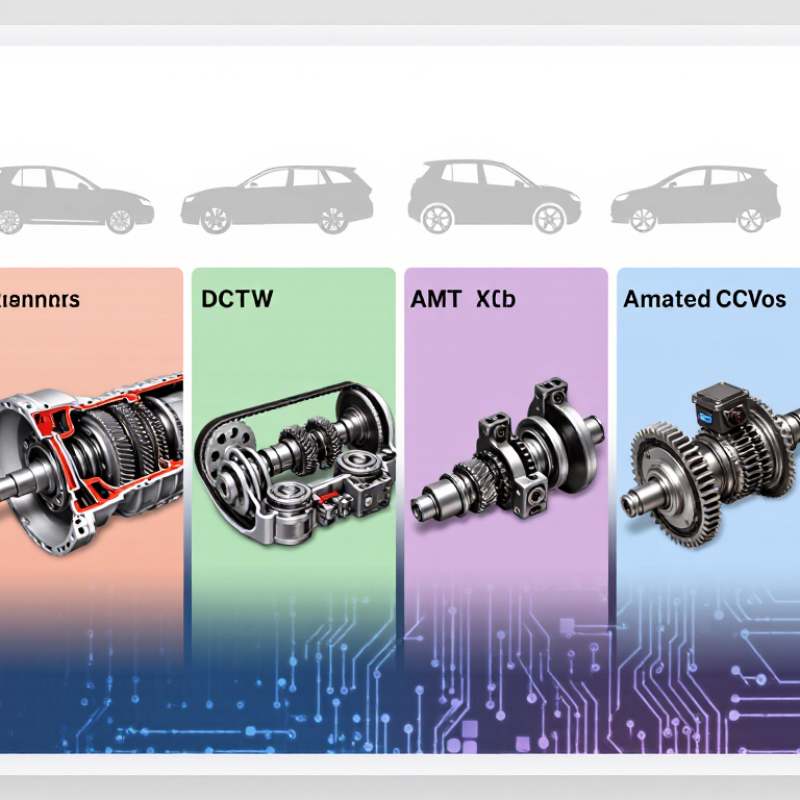
How Transmission Systems Transfer Power
A
transmission system transfers engine or motor power to the wheels while controlling speed and torque. Its basic job is simple. Its engineering is not. In a manual transmission, the driver selects gear pairs through a clutch and shift mechanism. The selected ratio changes shaft speed before torque reaches the final drive. Lower gears multiply torque for moving uphill or carrying weight. Higher gears reduce engine speed during steady travel.
Automatic transmissions perform these changes with planetary gearsets, hydraulic pressure, and electronically controlled clutches. A fluid coupling softens engagement, although it can waste energy as heat. Heat matters. Continuously variable transmissions use pulleys and a belt or chain. They adjust the ratio smoothly instead of using fixed gears. Dual-clutch systems use two clutches, preparing the next ratio before the shift. That design can feel quick, but low-speed operation may become less smooth.
Electric drivetrains often use a single-speed reduction gear because electric motors deliver strong torque across a wide speed range. During inspections, technicians check fluid condition, leaks, clutch response, and unusual vibration. A burnt smell or delayed engagement deserves attention. Wear leaves clues. Still, diagnosis is rarely perfect from one symptom. Temperature, load, and maintenance history can change the evidence. A steep driveway, cold fluid, or heavy trailer may reveal weaknesses that normal driving hides.
Manual Transmission: Direct Driver-Controlled Gear Selection
A manual transmission lets the driver choose gears directly, using a gear lever and clutch pedal. The clutch briefly separates the engine from the drivetrain, allowing a gear change without forcing the gears together. The driver also decides when to shift, based on road speed, engine sound, and how much power is needed. It takes practice.
Starting on a hill makes that coordination clear. The driver must release the clutch smoothly while adding enough throttle to prevent the engine from stalling. Too much throttle can waste fuel and create a sharp surge; releasing the pedal too quickly may cause a jolt. There is no single shift point for every situation. A steep road, a loaded vehicle, and a gentle cruise call for different choices.
Manual gearboxes can feel engaging because the driver is part of each shift, but that control brings more work in stop-and-go traffic. The clutch is a wear item, and riding the pedal can shorten its service life. Shifting by engine sound is useful, though sound alone can mislead; the tachometer and driving conditions matter too. Even experienced drivers sometimes choose the wrong gear. That small mistake is worth noticing, not ignoring.
Automatic Transmission: Self-Shifting Gears for Everyday Driving
Automatic transmissions handle gear changes while the driver focuses on traffic, steering, and the next turn. Most conventional systems use a torque converter to transfer engine power and gearsets to provide different ratios. Sensors and electronic controls select shifts as speed and engine load change. In stop-and-go traffic, that can mean smoother starts without operating a clutch pedal. You may feel a brief change in engine sound as the gearbox shifts. Not every shift is perfectly smooth.
The U.S. Environmental Protection Agency’s 2024 Automotive Trends Report estimates average new-vehicle fuel economy at 27.1 miles per gallon for model year 2023. That figure covers whole vehicles, not automatic transmissions alone; it should not be read as proof that one transmission type saves fuel. Modern automatics can use many gear ratios to keep engine speed in an efficient range, but results depend on vehicle design, driving conditions, and maintenance. An automatic can still feel hesitant when cold or under hard acceleration.
Tips: At a safe, level stop, keep your foot firmly on the brake and select “Park” before switching off. Check the owner’s manual for the correct fluid inspection and service procedure; requirements vary by transmission. Note any new slipping, delayed engagement, or unusual shudder, and arrange a qualified inspection. Don’t ignore a change just because the car still moves.
What Are the Top Types of Transmission Systems? - Automatic Transmission: Self-Shifting Gears for Everyday Driving
| Transmission type |
How it shifts |
Typical driving feel |
Potential advantages |
Common trade-offs |
| Torque-converter automatic |
Uses a fluid coupling and planetary gearsets; hydraulic or electronic controls select gears automatically. |
Usually smooth when pulling away and changing gears. |
Well suited to stop-and-go traffic; many designs can handle substantial engine torque. |
Efficiency and shift response vary by design; the torque converter can create energy losses before its lock-up clutch engages. |
| Continuously variable transmission (CVT) |
Often varies the ratio using adjustable pulleys and a belt or chain, rather than fixed gear steps. |
Acceleration can feel smooth, with engine speed staying nearly constant as vehicle speed rises. |
Can keep the engine near an efficient operating range under suitable conditions. |
Some drivers notice a less familiar engine sound or response; capability depends on the specific design. |
| Dual-clutch transmission (DCT) |
Uses two clutches, typically assigning odd and even gears to separate shafts, so the next gear can be prepared in advance. |
Can deliver quick, distinct gear changes during acceleration. |
Direct mechanical connection can support efficient operation and rapid shifts. |
Low-speed creeping may feel less smooth in some designs; clutch behavior and calibration affect comfort. |
| Automated manual transmission (AMT) |
A conventional manual gearbox with actuators that operate the clutch and select gears automatically. |
May pause or feel more noticeable between shifts than a conventional automatic. |
Uses a relatively familiar manual-gearbox layout while removing the need for the driver to shift. |
Shift smoothness depends on the control system; some versions can feel hesitant in traffic. |
| Hybrid power-split e-CVT |
In many hybrid systems, a planetary power-split device and electric motor-generators manage engine and motor power without conventional stepped shifts. |
Often delivers continuous-feeling acceleration; engine speed may not rise in direct proportion to road speed. |
Can coordinate engine and electric-motor power for efficient driving in a hybrid vehicle. |
Its operation differs from a belt-and-pulley CVT, and performance depends on the overall hybrid system. |
Note: Features and driving characteristics vary with transmission design, vehicle tuning, and operating conditions.
Continuously Variable Transmission: Seamless Ratio Changes
What Are the Top Types of Transmission Systems?
Continuously Variable Transmission: Seamless Ratio Changes
A continuously variable transmission uses two adjustable pulleys and a strong belt or chain. Their changing diameters create countless gear ratios. The system adjusts smoothly instead of shifting through fixed gears. Acceleration can feel almost uninterrupted, especially in city traffic. The engine often stays near its most efficient operating range.
From a technician’s perspective, this design can reduce unnecessary shifting and improve driving comfort. However, seamless does not mean flawless. Some drivers dislike the steady engine sound during hard acceleration. Heavy loads, steep roads, and poor maintenance can increase heat and wear. Correct fluid matters greatly. A small servicing mistake may create expensive problems later. This is where published service procedures and trained diagnostics become essential.
Tips: Accelerate progressively and avoid sudden throttle changes when possible. Check the fluid condition at recommended intervals. Never ignore shuddering, delayed movement, or unusual whining. These symptoms may appear before serious damage. Also, allow time for adaptation. CVT behavior feels different, and judging it too quickly can be misleading.
Dual-Clutch Transmission: Rapid Gear Changes Through Two Clutches
A dual-clutch transmission uses two clutches, usually assigning one to odd-numbered gears and the other to even-numbered gears. While one gear drives the car, the next can be preselected on its separate shaft. The swap may feel almost immediate: engine pull continues as the clutches trade roles. That is the appeal. On a winding road, quick shifts can keep the engine near its useful rev range without a conventional torque converter.
The design has trade-offs. In slow traffic, repeated clutch engagement can feel hesitant or slightly shuddery, especially when creeping up a steep ramp. The sensation is not always a fault, but it deserves attention if it worsens. The U.S. EPA’s 2023 Automotive Trends Report gives a preliminary average fuel economy of 27.1 miles per gallon for new vehicles in model year 2022. That fleet-wide figure is not a DCT result; it is useful context, not proof that this transmission saves fuel in every car. Actual efficiency depends on calibration, vehicle weight, road conditions, and driving style. A test drive in stop-and-go traffic can reveal more than a brief highway loop. Short trips matter. One small caveat: rapid shifts do not automatically mean a smoother or cheaper ownership experience.
Dual-Clutch Transmission: Rapid Gear Changes Through Two Clutches
The chart shows indicative gear-shift interruption ranges for common transmission architectures.
A dual-clutch transmission uses two independently controlled clutches: one manages odd-numbered gears while the other prepares the next even-numbered gear, helping reduce torque interruption during shifts.
Actual shift times vary with vehicle design, software calibration, engine torque, and driving conditions.
Conclusion
Transmission Systems transfer engine power to a vehicle’s wheels by adjusting how that power is delivered across different speeds and driving conditions. Their design affects how a vehicle accelerates, how smoothly it changes speed, and how much control the driver has. The main types each manage gear ratios in a distinct way.
A manual transmission lets the driver select gears directly, offering hands-on control. An automatic transmission shifts gears on its own for convenient everyday driving. A continuously variable transmission changes ratios smoothly rather than moving through a fixed set of gears, helping maintain steady power delivery. A dual-clutch transmission uses two clutches to prepare and shift between gears quickly, combining rapid changes with automatic operation. Understanding these differences can help drivers identify which transmission style best suits their preferences and needs.

 BOXTOP ELECTROMECHANICAL EQUIPMENT