Choosing the right Rotary Motion Devices can determine whether a machine runs smoothly or repeatedly stops for adjustment. Global buyers often compare rotary actuators, gearboxes, rotary unions, turntables, indexing systems, and precision servo modules. Each device solves a different motion challenge.
A packaging line may need fast indexing with repeatable positioning. A robotic arm may require compact torque and controlled acceleration. In contrast, a rotary union must transfer air, water, or hydraulic fluid while the shaft turns. Small differences matter. Load capacity, backlash, speed, sealing quality, mounting space, and maintenance access can change the final decision.
This guide examines ten widely used rotary motion solutions for international purchasing teams. It considers practical performance, supplier documentation, material quality, service support, and compatibility with common industrial standards. Real factory conditions are rarely perfect. Dust enters housings. Temperatures fluctuate. Operators make adjustments. A specification sheet cannot show everything.
The selected devices are not ranked by marketing claims alone. Their value depends on application demands, operating cycles, installation accuracy, and available technical support. Buyers should verify torque ratings under actual duty conditions, not only under ideal laboratory tests. That point is easy to overlook.
Some products may appear efficient but require expensive integration. Others may cost more initially yet reduce downtime over several years. Regional voltage requirements, shipping protection, spare-part availability, and qualified maintenance should also influence procurement decisions. No shortlist is flawless. A careful buyer still needs drawings, test data, warranty terms, and direct supplier communication before approval.
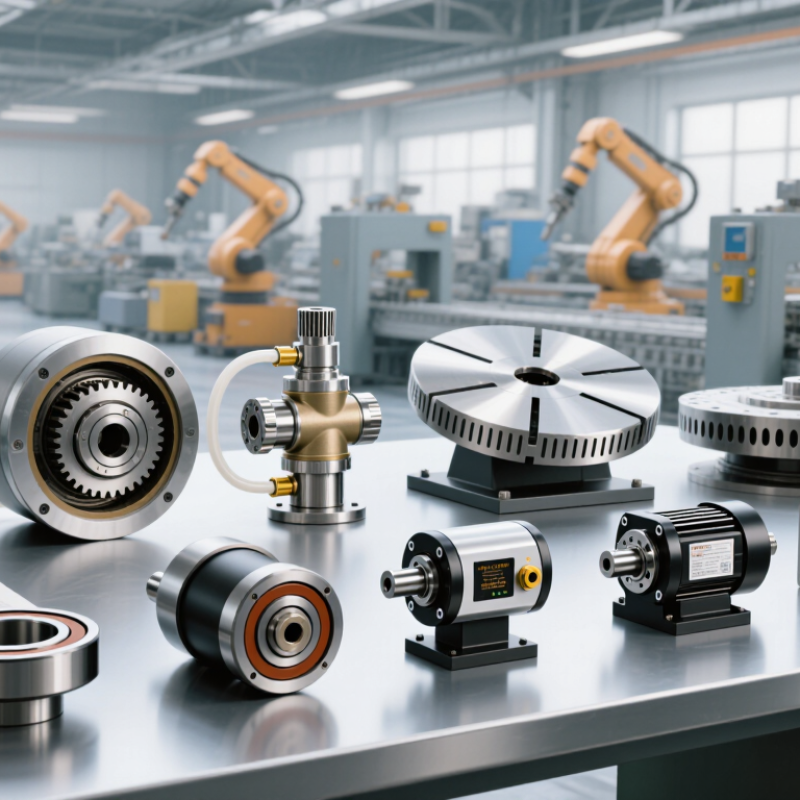
What Are Rotary Motion Devices and How Do They Work?
10 Best Rotary Motion Devices for Global Buyers?
Rotary motion devices convert energy into controlled circular movement.
Common examples include electric motors, geared motors, servo systems, stepper motors, rotary actuators, clutches, brakes, and rotary encoders.
A motor creates torque. A gearbox changes speed and increases output force. An encoder reports shaft position, helping the controller correct movement in real time.
The operating process is straightforward. Electrical power reaches the motor windings, producing a rotating magnetic field. This field turns the rotor and connected shaft. Bearings support the shaft, while seals protect internal parts from dust, moisture, and lubricants.
In automated equipment, a drive regulates speed and torque. A feedback sensor then checks actual movement. Small errors can stop a machine.
Market data shows why these devices matter. The International Federation of Robotics reported 541,302 industrial robots installed worldwide in 2023. Many use servo motors, reducers, and encoders for accurate rotary motion.
The International Energy Agency has also reported that electric motor systems consume roughly 50% of global electricity. Efficient selection is therefore important.
Buyers should compare torque, speed, duty cycle, backlash, protection rating, and maintenance access. A compact device may fit the drawing but fail under continuous heat.
That mistake is common. Reported market figures also vary by definition, region, and measurement year, so buyers should verify technical claims before purchasing.
Key Types of Rotary Motion Devices for Industrial Applications
Key Types of Rotary Motion Devices for Industrial Applications
Rotary motion devices convert motor power into controlled torque, speed, or positioning. Common choices include gearboxes, belt drives, chain drives, direct-drive motors, rotary actuators, and indexing tables. Each suits a different load pattern. A gearbox increases torque but adds backlash, heat, and maintenance points. Belt drives run quietly and absorb shock, while chain drives tolerate harsher environments. They can be noisy.
Industrial demand is expanding with automation. The International Federation of Robotics reported 541,302 industrial robot installations worldwide in 2023. These systems depend on accurate rotary joints, reducers, and servo-driven stages. For packaging lines, indexing tables provide repeatable stops. For material handling, geared drives deliver steady torque at low speed. Direct-drive systems remove transmission losses, but their higher purchase cost may challenge smaller factories.
Energy performance deserves equal attention. The International Energy Agency has reported that electric motor systems consume roughly 46% of global electricity. This makes device selection more than a mechanical decision. Buyers should compare rated efficiency, duty cycle, thermal limits, sealing, and available service skills. Field inspections often find oversized motors paired with poorly aligned couplings. The specification looked correct. The result was vibration and wasted energy. Standards such as ISO 10816 can support vibration evaluation, but site conditions still matter. Reported market figures vary by methodology, so procurement teams should verify the original dataset, test conditions, and regional assumptions before comparing suppliers.
10 Leading Rotary Motion Devices for Global Buyers
10 Best Rotary Motion Devices for Global Buyers
10 Leading Rotary Motion Devices for Global Buyers
Global buyers need more than a familiar catalog name. They need predictable torque, service life, and replacement access. The ten leading device groups include servo motors, stepper motors, brushless DC motors, induction motors, planetary gearboxes, worm gearboxes, harmonic reducers, rotary actuators, rotary tables, and rotary unions.
The International Federation of Robotics reported 541,302 industrial robots installed worldwide in 2023. This growth increases demand for precise motors, compact reducers, and dependable rotary positioning systems. The International Energy Agency estimates that motor-driven systems consume about 46% of global electricity. Efficiency therefore matters beyond the purchase price. A high-efficiency motor can reduce heat around a conveyor drive, while correct gearbox sizing prevents early tooth wear.
In practical sourcing, compare rated torque, peak torque, backlash, duty cycle, ingress protection, noise, and maintenance intervals. A planetary gearbox suits high torque in limited space. A worm gearbox offers useful self-locking behavior, but efficiency may be lower. Harmonic reducers provide excellent precision, yet shock loads deserve careful review. Rotary unions should match pressure, media, speed, and seal materials exactly.
These figures guide decisions, not replace testing. Supplier datasheets sometimes show ideal conditions. Real factories include dust, vibration, cold starts, and hurried maintenance. Buyers should request sample testing, inspection records, and documented quality procedures. The shortlist is useful, but it is not perfect. A cheaper device can become expensive after one unexpected shutdown.
10 Leading Rotary Motion Devices for Global Buyers
The chart compares representative maximum rotational speeds commonly specified for major rotary motion device categories. Actual performance varies according to size, load, duty cycle, control method, lubrication, and application requirements.
How to Compare Performance, Compatibility, and Operating Costs
Comparing the 10 best rotary motion devices requires more than checking rated speed and torque. Servo motors deliver precise positioning, while stepper motors offer simpler control and predictable holding torque. Gearboxes increase output torque but introduce backlash, heat, and lubrication needs. The International Energy Agency reports that electric motor systems consume roughly half of global electricity, making efficiency a serious purchasing factor. Small percentage losses become expensive in continuous production.
Check performance at the actual duty point, not only at the catalogue maximum. Record load torque, acceleration time, shaft speed, duty cycle, and stopping accuracy. A device rated for 3,000 rpm may overheat during repeated starts. Measure vibration near the bearing housing. It often reveals alignment problems early. ISO 10816 vibration guidance can support this inspection, although site conditions still influence acceptable limits. Real machines are untidy.
Compatibility includes voltage, controller communication, mounting dimensions, shaft tolerances, seals, and ambient temperature. A technically strong motor can fail when its encoder protocol does not match the control system. Compare total operating cost over five years. Include electricity, lubrication, replacement bearings, downtime, and commissioning labor. DOE motor-system assessments commonly associate motor-driven equipment with about 70% of industrial electricity use in the United States. That figure makes efficiency testing worthwhile. Yet energy savings may not justify a costly retrofit when production downtime is underestimated. Track measured kWh and maintenance hours after installation, then revise the comparison using plant data.
Global Purchasing Factors: Standards, Suppliers, and After-Sales Support
10 Best Rotary Motion Devices for Global Buyers
Choosing the best rotary motion device depends on load, speed, accuracy, and maintenance access. Common options include servo motors, stepper motors, gearboxes, rotary actuators, torque motors, and precision rotary tables. Buyers should request measured torque curves, backlash values, shaft runout, noise levels, and operating temperature ranges. A polished catalogue is not enough.
Standards deserve careful checking. Suppliers should provide quality records aligned with ISO 9001 and risk information supporting safe machine integration. Electrical equipment may also require documentation related to regional safety and electromagnetic compatibility requirements. Confirm voltage, connectors, ingress protection, and testing methods before ordering samples. Small mismatches can delay installation.
Supplier evaluation should include factory audits, production traceability, inspection reports, and realistic lead times. Ask whether critical parts are made in-house or outsourced. After-sales support matters when a rotary table stops during a night shift. Look for clear warranty terms, spare-part availability, repair procedures, and technical response times. Remote diagnosis is useful, but not always sufficient. A local service partner can reduce downtime, although its skills require verification. Buyers should test one unit under real load before approving a larger order. My own preference is to document every assumption, because early specifications are often incomplete. That extra review can expose heat buildup, unexpected backlash, or an unsuitable duty cycle.
FAQS
Common groups include servo motors, stepper motors, brushless motors, induction motors, gearboxes, rotary actuators, rotary tables, and rotary unions. The best choice depends on torque, accuracy, speed, space, and maintenance needs.
A servo motor suits applications needing accurate positioning, controlled acceleration, and repeated stopping. Check encoder compatibility, controller communication, peak torque, and stopping accuracy. Test the complete system.
Stepper motors provide simpler control and predictable holding torque. They may suit moderate-speed positioning tasks with stable loads. However, repeated acceleration can cause heat or missed steps.
A planetary gearbox delivers high torque in a compact space. A worm gearbox may provide useful self-locking behavior. Its efficiency can be lower. Confirm output torque, heat, lubrication, and duty cycle before purchase.
Harmonic reducers offer precise motion and low backlash. They need careful review under shock loads. Check rated torque, peak torque, backlash, service life, and mounting accuracy. Ideal catalogue conditions can mislead.
Match pressure, media, speed, seal materials, temperature, and connection dimensions. A small seal mismatch can create leakage or early replacement. Review real operating conditions, not only laboratory ratings.
Include electricity, lubrication, replacement bearings, commissioning labor, and production downtime. A cheaper device may cost more after one unexpected shutdown. Measure energy and maintenance results after installation. Revise the estimate.
Request sample testing, inspection records, and documented quality procedures. Test the device under actual load, speed, starts, dust, vibration, and cold conditions. Measure heat, noise, vibration, and stopping accuracy. Real factories differ.
Check voltage, controller communication, mounting dimensions, shaft tolerances, seals, and ambient temperature. An efficient motor can still fail with an incompatible encoder protocol. Mounting details matter more than expected.
Conclusion
Rotary Motion Devices are essential components that convert, transmit, or control rotational movement in industrial systems. This article explains how they work and introduces key categories, including motors, gearboxes, rotary actuators, couplings, turntables, and indexing mechanisms. It also presents ten practical device options for global buyers, highlighting how each solution can support automation, material handling, packaging, robotics, and other demanding applications.
To make an informed choice, buyers should compare torque, speed, precision, load capacity, duty cycle, installation requirements, energy use, maintenance needs, and total operating costs. The article also addresses important global purchasing factors, such as technical standards, environmental ratings, documentation, supplier reliability, lead times, spare-parts availability, warranty terms, and after-sales support. By evaluating both performance and long-term serviceability, companies can select Rotary Motion Devices that provide dependable operation, system compatibility, and sustainable value across different markets and working conditions.

 BOXTOP ELECTROMECHANICAL EQUIPMENT